Best 3D Printers Under $200: Four Machines, No Junk
How to read this list
The under-$200 tier is where 3D printing's marketing is least honest: listings pad the class with last-generation machines, kit printers that arrive as a bag of extrusions, and 'sale' prices that are the permanent price wearing a costume. So this list has a strict rule — every machine here was verifiably at or under US$200 at checking on November 24, 2026, is sold assembled or near-assembled by a major brand, and prints well enough that we would hand it to a beginner without an apology. That rule leaves four machines. If your budget can stretch to $300, the field widens considerably — our under-$300 round-up scores five more — but if $200 is the ceiling, these four are the honest answer, and the first of them is genuinely excellent.
Quotable fact: At the prices checked on November 24, 2026, the cheapest machine in this list (the Ender-3 V3 SE, from US$169) and the most expensive (the A1 mini at US$199) differ by just US$30 — yet one automates nearly everything and the other deliberately teaches you the machine.
The four picks, scored
| Printer | Beginner score | Best at | Checked price (Nov 24, 2026) |
|---|---|---|---|
| Bambu Lab A1 mini | 9.0 | Best overall — easiest first prints | US$199 (Bambu sale) |
| Creality Ender-3 V3 SE | 8.1 | Best teacher — biggest bed here | US$169–199 |
| Entina Tina2C | 8.0 | Tiny assembled starter for kids' desks | US$189.99 |
| Anycubic Kobra 2 Neo | 7.8 | Straightforward budget bed-slinger | ≈US$199 class |
1. Bambu Lab A1 mini — best overall, and it is not close
Bambu Lab A1 mini
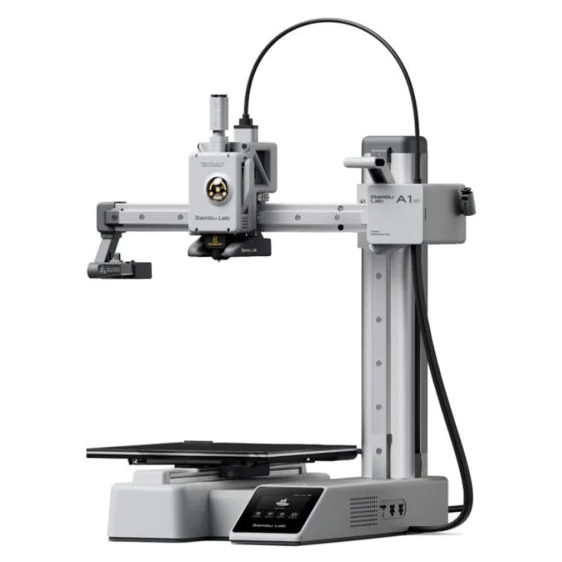
- Full auto calibration — Z-offset, bed mesh, flow and resonance — no paper, no knobs
- Genuinely quiet at ~48 dB; a desk printer, not a garage printer
- AMS lite option adds tidy 4-colour printing later for a modest extra
- 180 mm cube build volume outgrows ambitious projects fast
- US$199 is its sale price — at list it leaves this list entirely
The A1 mini wins this list the way it wins our full A1 mini review: by removing failure. Its automatic calibration suite — eddy-current Z-offset sensing, automatic bed mesh, automatic flow calibration, tangle and runout detection — means a first-time owner's first print usually just works, and at about 48 dB it can live on a desk in a shared room. Two honest caveats belong in bold. First, the build volume is 180 × 180 × 180 mm: organisers, stands, toys and brackets fit; helmets do not. Second, US$199 is the price in Bambu's Black Friday event (October 27 – December 1, 2026) — outside sale windows this printer sits above $200, and this list will say so when we re-check. While the sale runs, nothing else under $200 is in its league.
2. Creality Ender-3 V3 SE — the tinker's teacher
Creality Ender-3 V3 SE
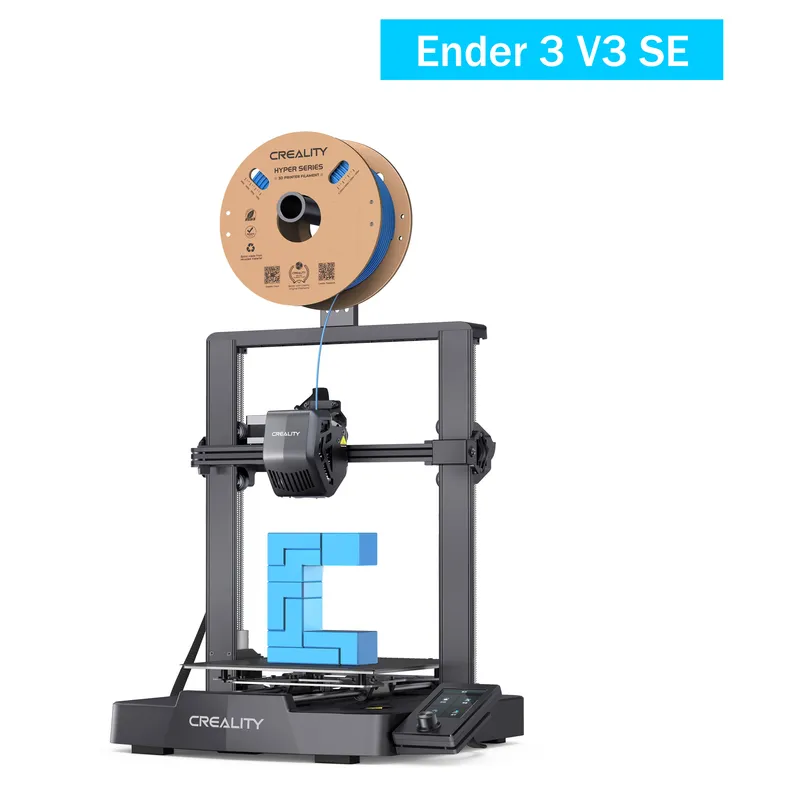
- Cheapest seat in the class (US$169–199) with auto levelling and auto Z-offset
- Biggest bed here: 220 × 220 × 250 mm — real projects fit
- Huge owner community — every problem you will ever have is already documented
- Automates less than the Bambu — you will learn first-layer discipline personally
- Open frame, single colour, and slower than modern CoreXY machines
The V3 SE is the pick for buyers who want to learn 3D printing, not just own its output. It has the modern basics — CR Touch auto levelling, automatic Z-offset, a direct-drive extruder — wrapped in the most documented, most modified, most community-supported platform in the hobby. One model-specific warning from the owner forums: on the V3 KE/SE, prints that stop sticking despite auto-levelling are usually the automatic Z-offset quietly overriding an owner's manual correction — our fix guide for exactly that fault is linked from the comparisons hub. When something goes wrong (and learning means something will), the fix exists in a hundred forum threads. That is worth real points to the right buyer, and negative points to the buyer who wanted an appliance.
3. Entina Tina2C — the tiny, assembled starter
Entina Tina2C
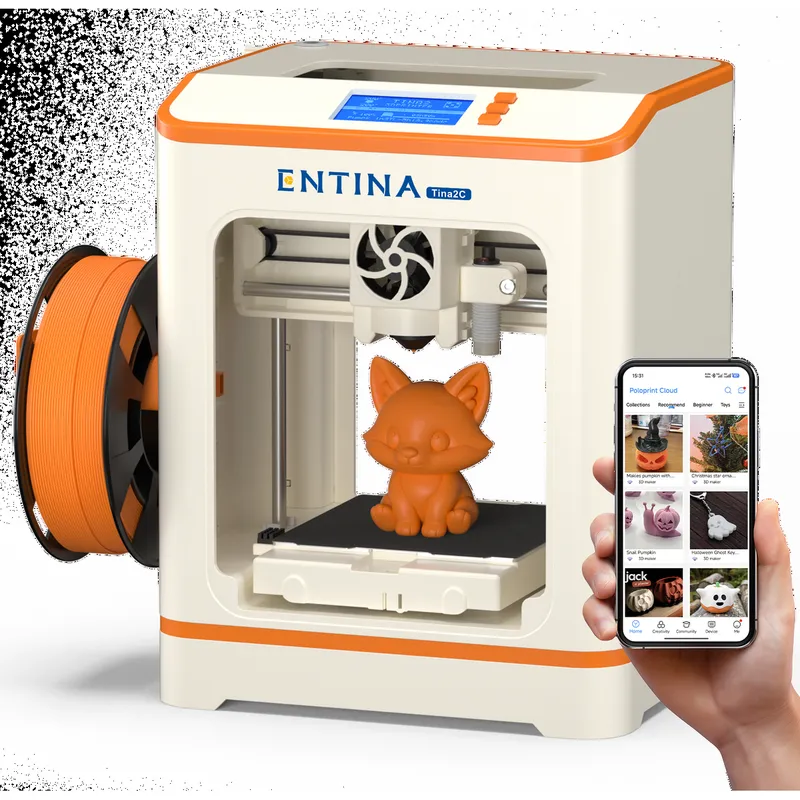
- Arrives fully assembled — open the box, connect the app, print; nothing to build
- 100 mm cube keeps prints small, quick and cheap while enthusiasm is tested
- 9-point auto levelling and a flexible spring-steel plate: no scraping, no tuning
- No heated bed and PLA-first (PLA/TPU listed) — a deliberately narrow machine
- The 100 mm cube is outgrown fast by a keen child — it is a trial, not a destination
The Tina2C earns its place as the standing kids' and first-taste pick in tier guides: at US$189.99 it is a complete, assembled, app-guided starter (the PoloPrint app carries ready models) in a compact, partly covered 2.5 kg body that fits a child's desk. Its limits are honest ones — a 100 × 100 × 100 mm build volume, no heated bed, PLA-first printing — and Entina's own safety notice says younger users should be supervised at all times around the hot nozzle. Frame it as the inexpensive test of interest: if a Tina2C is still running weekly in six months, the upgrade purchase writes itself. It also appears in our printer gifts for kids guide, where the safety framing is covered in full.
4. Anycubic Kobra 2 Neo — the straightforward budget bed-slinger
Anycubic Kobra 2 Neo
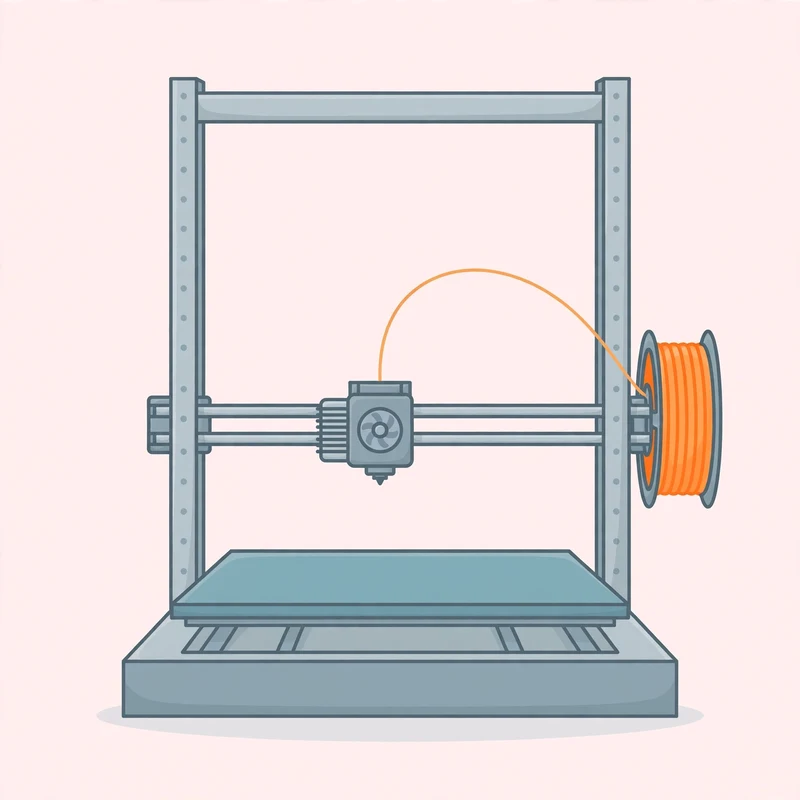
- A conventional, well-understood bed-slinger at the ~US$199 class price point
- Auto levelling and a PEI spring-steel plate — the modern basics are present
- 220 mm-class bed: meaningfully bigger than the A1 mini and Tina2C
- Automates far less than the A1 mini — first-layer skill is yours to learn
- Street prices move around the $200 line; verify today's figure before assuming it qualifies
The Kobra 2 Neo is the honest workhorse of this tier: a direct-drive bed-slinger with automatic levelling, a spring-steel PEI plate and a 220 mm-class build area, sold in the ~US$199 class across the budget guides that track this tier (checked November 24, 2026). Nothing about it is best-in-class, and nothing about it is a trap — it is the machine for a buyer who wants a conventional printer, a bigger bed than the mini offers, and a brand with a real support operation behind it. Its score is capped by the company it keeps: at the same money, the A1 mini automates more, and the Ender teaches more. The Neo's case is the middle path, and for some buyers the middle path is exactly right.
Specifications, side by side
| Spec | A1 mini | Ender-3 V3 SE | Kobra 2 Neo | Tina2C |
|---|---|---|---|---|
| Build volume | 180 × 180 × 180 mm | 220 × 220 × 250 mm | 220 mm class | 100 × 100 × 100 mm |
| Enclosed | No | No | No | Partly (compact covered frame) |
| Auto calibration | Full: Z-offset, mesh, flow, resonance | Auto levelling + auto Z-offset | Auto levelling | 9-point auto levelling |
| Multicolour option | AMS lite (4, optional) | No | No | No |
| Assembly | Minutes — mostly built | Part-assembled | Part-assembled | Fully assembled |
Quotable fact: Every printer in this list is open-frame, which settles the materials question for the whole tier: PLA, PETG and TPU are the working materials under $200, and ABS or ASA mean saving for an enclosed machine instead.
Year-1 cost: the honest total
Budget the printer plus roughly 4 kg of filament for a normal first year (about US$80 at US$20/kg for good PLA/PETG) — run your own mix through the filament cost calculator. On checked prices that makes the real first-year entry: A1 mini ≈ US$279 (US$199 sale + filament), Ender-3 V3 SE ≈ US$249–279, Kobra 2 Neo ≈ US$279, and Tina2C ≈ US$270 — its small prints use less plastic, so call it US$240–270 in practice. Wear parts (nozzles, plates) are minor on all four — under roughly US$30 in a normal year. The lesson of the table is the one this tier always teaches: the printer is the cheap part of the hobby, and a $200 ceiling on the machine is really a ~$280 first year.
What we left out, and why
Three kinds of listing did not survive this list's rules. Kit printers that arrive as extrusions and optimism: they can print beautifully once built and tuned, but 'build the printer correctly' is not a beginner's first project. Last-generation bed-slingers without auto levelling or a spring-steel plate: each missing basic is a recurring frustration priced at a few dollars of savings. And permanent-sale listings whose 'under $200' price requires a coupon stack no ordinary buyer will reproduce: if the price cannot be verified plainly, it does not qualify a machine for a price-tier list. If a machine you are considering is in one of those groups, the question to ask is not 'is it cheap?' but 'what will it ask of me every week?' — the four picks above were chosen because their weekly ask is small.
Prices checked — November 24, 2026
Verified during research on November 24, 2026: Bambu's own store listed the A1 mini at US$199 in its Black Friday event (October 27 – December 1, 2026). The Ender-3 V3 SE sat at US$169–199 (Creality's Canadian Black Friday listing: CA$199). The Tina2C stood at US$189.99. The Kobra 2 Neo sat in the ~US$199 class across current budget guides. Prices move weekly — and in this tier they move across the $200 line itself — so the buttons give you today's figure, and the A1 mini's membership of this list is re-checked with its price.
The verdict
- Best overall: Bambu Lab A1 mini — the easiest first year in 3D printing, if 180 mm is enough and the sale price holds.
- Best teacher: Creality Ender-3 V3 SE — the biggest bed and the deepest community, for buyers who want to learn.
- Best tiny starter: Entina Tina2C — assembled, app-guided, and honest about being a first taste.
- Best middle path: Anycubic Kobra 2 Neo — a conventional bigger-bed machine at the class price.
Whichever you choose, the first month decides whether it becomes a hobby or a shelf ornament: keep the first prints small, learn what a good first layer looks like (our first-layer problems guide is the field manual), and let the machine earn its upgrades.
Updates and how we score
November 24, 2026: round-up published with all prices verified the same day. How we score: our scores rest on manufacturer specifications, documented features and patterns across published owner reports — not on hands-on lab testing in our own workshop. We re-check prices monthly and record changes here rather than silently editing them; a machine whose verified price leaves the tier leaves the list.
Common mistakes
- Comparing sticker prices only — every pick here is a ~US$250–280 first year once filament is counted.
- Assuming the A1 mini is always under $200 — US$199 is a sale price; at list price it belongs to the under-$300 list.
- Buying a kit printer as a first printer — building the machine is a second hobby, not a first step.
- Choosing the Tina2C for an adult's project list — its 100 mm cube is a starter's trial size by design.
- Expecting ABS under $200 — every machine in this tier is open-frame; plan PLA/PETG/TPU.
Printable quick-fix summary
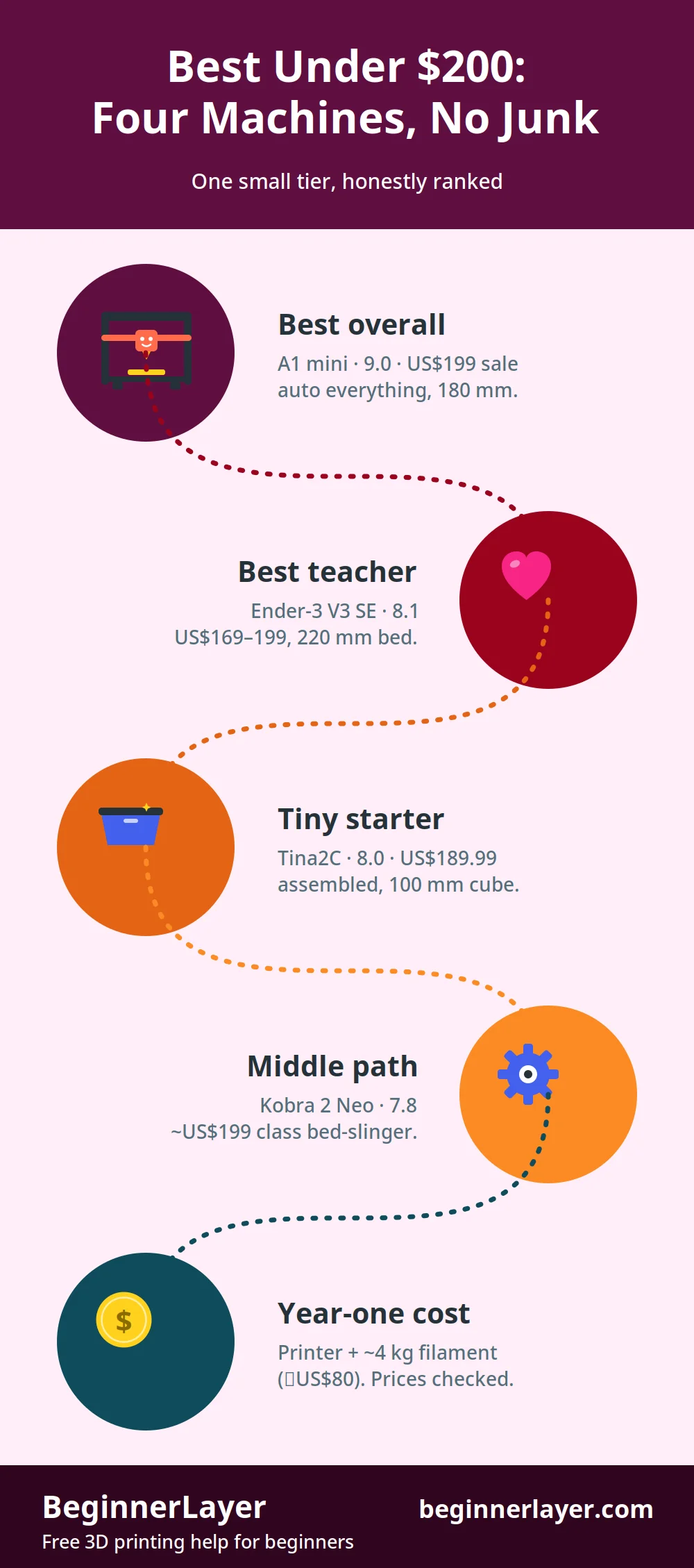
- Best overall: A1 mini (9.0) — US$199 sale, auto everything, 180 mm, ~48 dB.
- Best teacher: Ender-3 V3 SE (8.1) — US$169–199, 220 mm bed, huge community.
- Tiny starter: Tina2C (8.0) — US$189.99, fully assembled, 100 mm cube.
- Middle path: Kobra 2 Neo (7.8) — ~US$199 class, 220 mm-class bed.
- Year 1 = printer + ~4 kg filament (≈US$80). Prices checked Nov 24, 2026.
Print this box (the page is print-styled for it) and keep it by the printer.
Opens the print dialog — choose “Save as PDF” and you get this page as a clean BeginnerLayer PDF, masthead and all.
Questions people ask
What is the best 3D printer under $200 for a total beginner?
The Bambu Lab A1 mini while its US$199 sale price lasts: it automates calibration, flow and failure detection more completely than anything else at the price, and it is quiet enough for a desk. If the sale has ended or you need a bigger bed, the Ender-3 V3 SE is the tier's other honest answer.
Is a $200 printer really the whole cost?
No. Add roughly 4 kg of filament for a normal first year (about US$80). Every pick in this list lands around US$250–280 all-in — the honest comparison is printer plus filament, not printer alone.
Ender-3 V3 SE or A1 mini — which teaches me more?
The Ender, by design. It automates the basics (levelling, Z-offset) but leaves you closer to the machine's mechanics, backed by the largest owner community in the hobby. The A1 mini deliberately hides those lessons behind automation — better prints sooner, less understanding attached.
Can any printer under $200 print ABS?
Not well: all four picks are open-frame (the Tina2C is partly covered). ABS and ASA need an enclosure to avoid warping — if those materials are your plan, budget for an enclosed machine instead.
Sources
- Bambu Lab — A1 mini product page & store
- Creality — Ender-3 V3 SE product page
- BeginnerLayer — best 3D printers under $300
- BeginnerLayer — best 3D printers for beginners